
Turnkey Furniture Project Process | WTB Company
From Concept to Installation: Inside a Turnkey Furniture Project
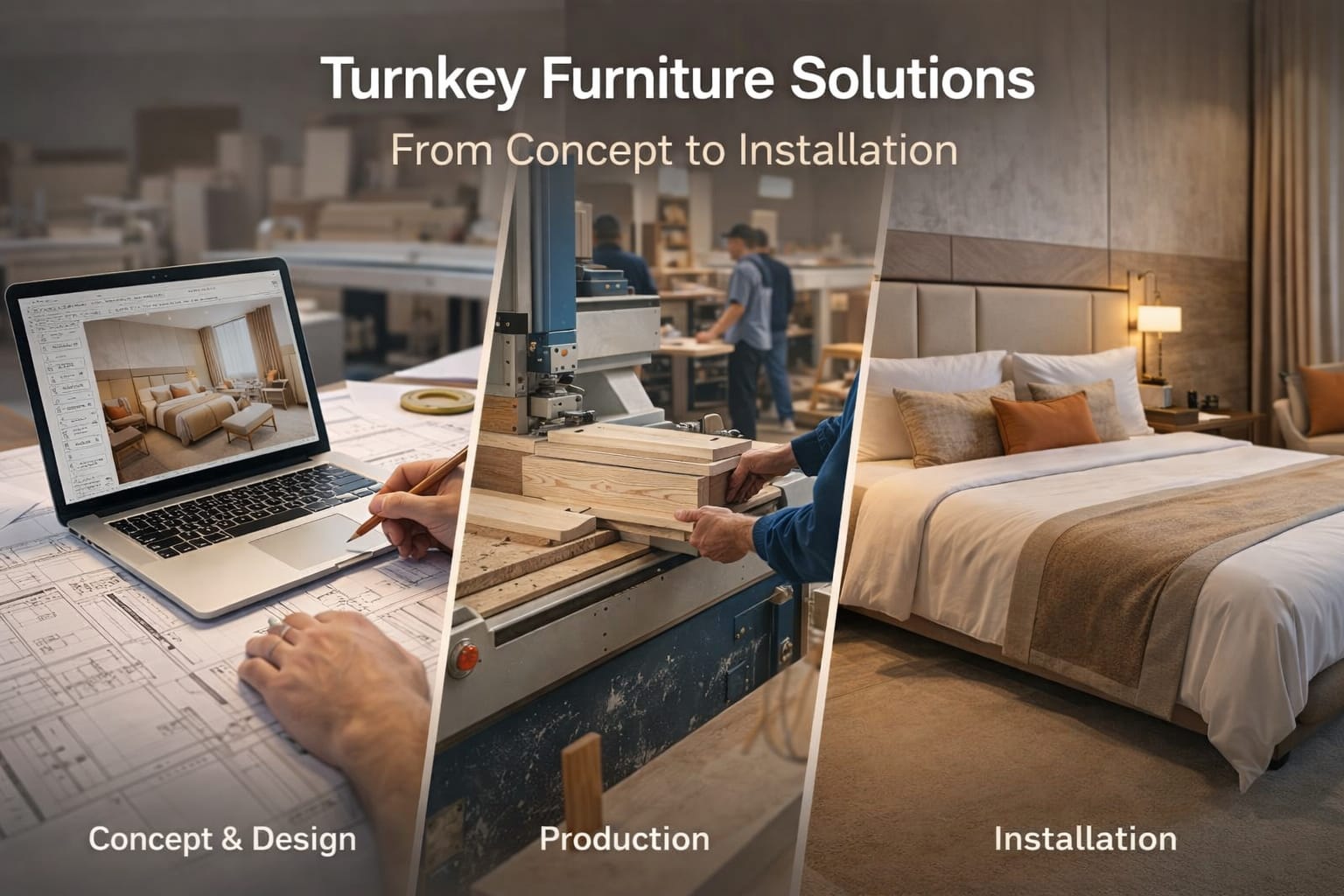
Turnkey furniture projects have become an essential solution for modern hospitality, commercial, and residential developments. As project timelines become tighter and quality expectations continue to rise, businesses increasingly seek integrated service models that eliminate complexity and ensure consistency. A turnkey approach allows companies to manage every phase of furniture and interior delivery under one coordinated structure — from the first design sketch to the final installation on site.
At its core, a turnkey furniture project is not only about supplying products. It is about delivering a complete, synchronized experience where design, engineering, production, logistics, and assembly operate as a unified system. This methodology significantly reduces communication gaps, accelerates decision-making, and protects project budgets from unexpected cost increases. For investors, architects, and procurement teams, working with a single experienced partner simplifies the entire process while increasing accountability and transparency.
Concept Development and Briefing
Every successful turnkey furniture project begins with a detailed concept phase. This stage focuses on understanding the client’s vision, brand identity, target audience, and functional requirements. Whether the project involves a luxury hotel, a vacation park, a corporate office, or a high-end residential complex, the objective is to translate abstract ideas into a concrete direction. During this phase, mood boards, material samples, and initial layouts are evaluated to establish a clear design language. A well-defined concept prevents revisions later in the project and ensures that all stakeholders share the same expectations from the outset.
Design, Engineering, and Customization
Once the concept is approved, the project moves into technical design and engineering. This stage transforms creative ideas into manufacturable solutions. Dimensions, materials, finishes, fabrics, and ergonomic considerations are carefully refined. Customization plays a major role here, as standardized products rarely meet the unique spatial or thematic needs of large-scale developments. Advanced 3D visualizations and prototypes allow clients to preview the final outcome before production begins. This reduces risk and increases confidence in design decisions while enabling precise alignment with architectural plans.
Production Planning and Quality Control
Production is where vision becomes reality. A reliable contract furniture manufacturer must combine craftsmanship with industrial precision. Production planning includes scheduling, material sourcing, workforce allocation, and machinery coordination. Equally important is quality control. High-traffic environments such as hotels, resorts, and offices demand furniture that is not only visually appealing but also durable, safe, and compliant with international standards. Structured inspection processes during and after manufacturing guarantee that every component meets performance and safety criteria before leaving the facility.
Logistics and Global Delivery
Logistics is often underestimated, yet it is one of the most critical elements of turnkey execution. Large projects frequently involve international shipping, customs documentation, packaging optimization, and coordinated delivery schedules. An experienced turnkey partner ensures that products arrive on time and in perfect condition. Efficient logistics planning prevents costly delays and protects the integrity of the design by ensuring that what is delivered precisely matches what was approved.
On-Site Installation and Final Handover
The final stage of a turnkey furniture project is on-site installation. Professional assembly teams coordinate with construction managers and interior designers to ensure flawless placement and finishing. This phase requires precision, timing, and technical expertise, as even the highest-quality furniture can lose impact if installation is poorly executed. A structured handover process, including final inspections and client approvals, marks the successful completion of the project.
The Strategic Advantage of Turnkey Solutions
The value of a turnkey furniture project lies in its ability to combine efficiency, design consistency, cost control, and quality assurance into a single framework. Instead of juggling multiple suppliers and contractors, businesses gain a trusted partner responsible for the entire journey. This integrated model not only accelerates delivery but also strengthens brand identity through cohesive interior environments.
At WTB Company, turnkey furniture projects are approached as long-term partnerships rather than one-time transactions. By merging design expertise, custom manufacturing capabilities, and international logistics experience, each project evolves into a functional and aesthetically refined environment. The goal is not simply to furnish spaces, but to create interiors that perform, inspire, and retain value over time.